Explore Oak Hill and Forest Hills Wooded Living
July 16, 2026
July 16, 2026
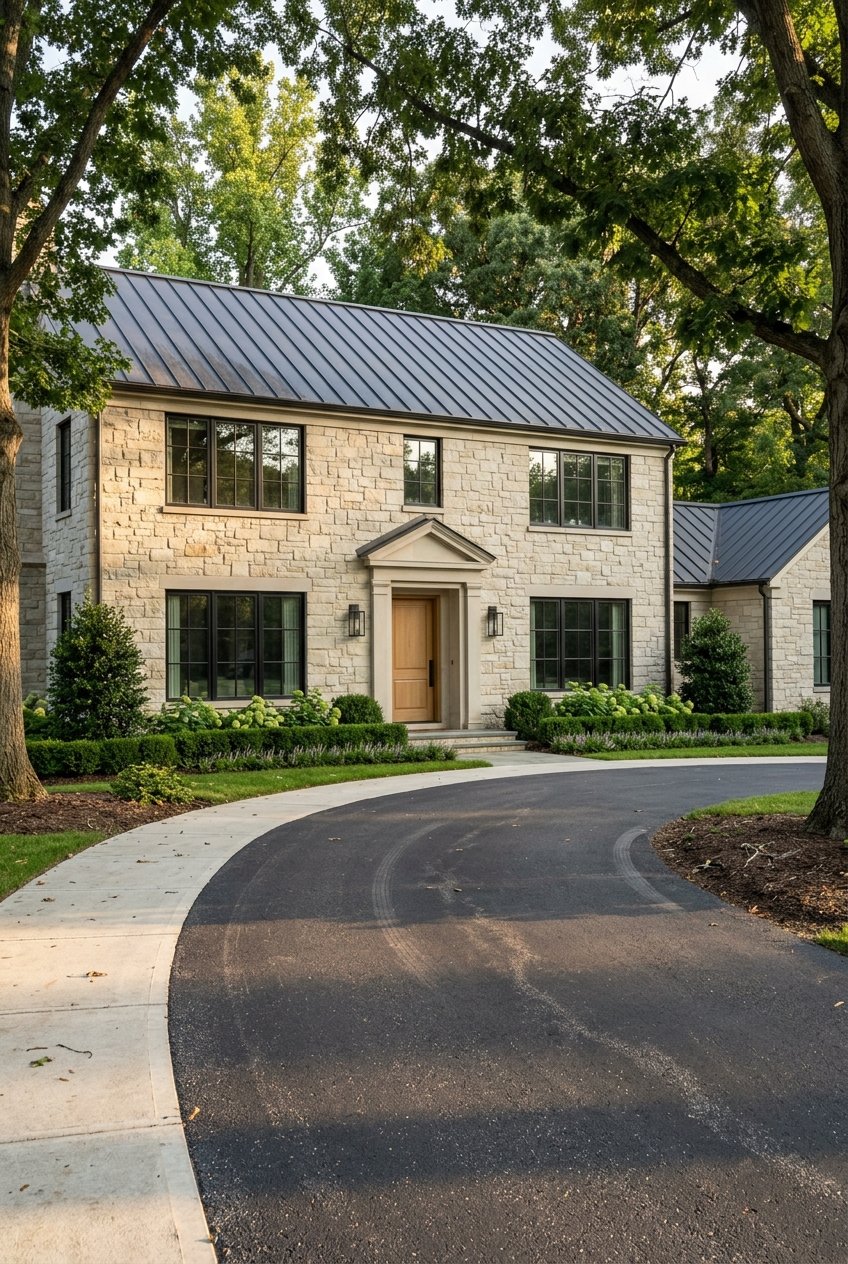
If you want room to breathe without feeling far from Nashville, Oak Hill and Forest Hills deserve a close look. These two small cities offer a rare mix of privacy, mature trees, and larger residential lots in a close-in south Nashville setting. Whether you are buying for lifestyle or selling a property with land value and presence, understanding what makes these communities different can help you make a smarter move. Let’s dive in.
Oak Hill and Forest Hills are neighboring incorporated cities in southwest Davidson County. They sit just south of downtown Nashville, and both remain notably small, with Tennessee State Data Center estimates for July 1, 2025 placing Oak Hill at 4,581 residents and Forest Hills at 4,473 residents.
That scale matters. Instead of feeling like fast-growing outer suburbs, these areas read more like close-in residential enclaves with a quieter rhythm. For many buyers, that balance is the main draw: you get wooded surroundings and a more private setting without giving up access to Green Hills or downtown.
One of the clearest themes in both communities is how strongly they prioritize residential character. Oak Hill says it is completely residential with no commercial establishments, and Forest Hills describes itself as almost exclusively residential with no commercial development.
In practical terms, that shapes your day-to-day experience. You are not moving here for a mixed-use, walkable retail environment. You are moving here because you want a home-centered setting where the landscape, lot size, and sense of separation play a bigger role in daily life.
Oak Hill has some of the most defined estate-style zoning in Davidson County. The city outlines six main residential zones, all for single-family dwellings, with minimum lot sizes ranging from 10,000 square feet to 4 acres depending on the zone.
That range creates variety, but the overall pattern still leans spacious. Setbacks, lot coverage, and height limits also vary by zone, and Oak Hill requires detailed site information for new one-family homes. If you are considering new construction or a major renovation, zoning and site review are not side notes here. They are central to the process.
Forest Hills is also low-density and primarily residential, but its development story is somewhat different. The city describes itself as a Nashville suburb that developed after World War II, with hundreds of dwellings added since 1970, while high-density housing remains prohibited.
For many buyers, the real appeal is not just square footage inside the home. It is the land around it. Forest Hills is characterized in Metro Nashville hazard-mitigation materials as low-density development on large, heavily wooded lots, and Oak Hill’s zoning structure supports a similar sense of space in many areas.
That translates to a setting where tree canopy and privacy are often part of the value story. Homes here can feel tucked away, even though you remain close to some of Nashville’s best-known destinations. If you want a property that feels buffered from the pace of the city, this part of Davidson County often delivers that experience.
These are not flat, uniform neighborhoods laid out on a rigid grid. The local hillside and steep-slope materials point to a landscape where roads, driveways, and lot layouts often follow the natural terrain.
Forest Hills says tree-covered hills and steep slopes are central to the area’s natural beauty. Oak Hill’s residential rules also call for soil studies when steep-slope issues may be present. For buyers, that means the shape and usability of a lot can vary quite a bit from one property to the next.
Life in Oak Hill and Forest Hills is defined less by what is inside the city limits and more by what is nearby. Oak Hill highlights Radnor Lake as a defining natural amenity and identifies it as Tennessee’s largest state natural area at 1,200 acres.
That access to nature is a major lifestyle advantage. If your ideal weekend includes walking scenic trails, spending time outdoors, or simply living near preserved green space, Oak Hill and Forest Hills have a strong case to make.
The Warner Parks add even more to that appeal. Metro Nashville says Percy and Edwin Warner Parks together attract close to a million visitors annually and offer scenic roadways, overlooks, hiking trails, mountain-bike trails, equestrian facilities, golf courses, and other recreation.
For many households, that park access is not just a bonus. It is part of the reason to buy here in the first place. A wooded property feels even more compelling when it is tied to a broader outdoor lifestyle.
Because both cities are overwhelmingly residential, most shopping and dining happen nearby rather than within Oak Hill or Forest Hills themselves. The Mall at Green Hills describes itself as Nashville’s iconic luxury shopping destination with more than 125 stores and restaurants.
That nearby convenience helps explain the appeal of these communities. You can live in a quieter, more private setting while still staying close to key retail and dining options. For buyers who want retreat at home and convenience when needed, that is a meaningful combination.
Oak Hill and Forest Hills tend to fit buyers who value privacy, mature trees, larger lots, and a close-in Nashville location. If you want a home that feels set apart, these communities often line up well with that goal.
They may be a less natural fit if your top priority is walking to shops, restaurants, or a more active commercial district. The land-use pattern here is intentionally different. The lifestyle is centered more on residential calm, landscape, and access to nearby destinations by car.
In communities like these, due diligence matters. Before you assume you can add onto a home, build a pool, remove trees, or reshape part of a lot, it is important to verify what local rules allow.
Some of the biggest items to review include:
Forest Hills states that most tree removals require a permit. That detail alone shows why buyers should look beyond the house itself and evaluate the property as a whole.
If schools are part of your home search, it is smart to verify assignment by exact address. Oak Hill notes that several schools are located within its borders, but assignment still needs to be confirmed.
Metropolitan Nashville Public Schools directs families to use its zone finder and district or cluster maps. Boundaries are address-specific and can change over time, so this is a step worth taking early in your process.
If you are selling in Oak Hill or Forest Hills, your home’s story often goes beyond beds, baths, and finishes. In these communities, the most marketable features are often the land itself, the tree canopy, the privacy, and the sense of discretion the property offers.
That means presentation should help buyers understand both the home and the setting. Lot character, natural screening, approach, and relationship to the terrain can all influence how a property is perceived. In a market where privacy and place matter, thoughtful positioning can make a real difference.
Oak Hill and Forest Hills are simple in one sense and nuanced in another. The lifestyle story is easy to understand: wooded, private, residential, and close to Nashville. But the property-level details can be more complex because zoning, topography, and permitting often matter as much as the house itself.
That is why buyers and sellers benefit from neighborhood-specific guidance. When you understand not just the home, but also the lot, the rules, and the local development pattern, you are in a much stronger position to protect value and plan your next move with confidence.
If you are considering a move in Oak Hill or Forest Hills, Custer Rowland offers the kind of tailored, high-touch guidance that helps you evaluate both lifestyle and long-term property value with clarity.
At Custer Rowland, we recognize that every real estate journey is deeply personal and distinct. Our commitment is to delve into the individual aspirations of each client, crafting a strategy that exceeds expectations. In Nashville's fiercely competitive market, it's not just about buying or selling property — it's about creating success stories.